
Where Federal BOP Releases Go
A person leaving BOP can enter the community, begin or continue supervised release, remain on parole in an older applicable case, or transfer to another correctional or immigration authority. The BOP locator establishes the reported end or projected end of BOP custody. It does not prove that every government restraint ended.
BOP release statistics likewise distinguish releases from transfers to another custodian. If a Carroll County jail departure was to the U.S. Marshals Service, BOP, a state agency, or ICE, it was not a community release from all custody. Identify the receiving agency first and follow that system's record.
Confirm a Federal Release in BOP
The BOP Inmate Locator accepts either a name with demographic filters or a BOP, FBI, INS, or DCDC number. A register number is the strongest input. With a name search, compare age, race, sex, and register number before choosing the result.
- Search the BOP locator by federal identifier when one is available.
- Otherwise search the exact name and use demographic fields to narrow it.
- Read the register number, release date, and location together.
- Distinguish a past date from a future date or an UNKNOWN result.
- Check the federal judgment and U.S. Probation record for post-custody supervision.
A location of “RELEASED” means the person is no longer in BOP custody. BOP also explains that a past release date with no facility indicates release on that date. A future date is projected and may change. “UNKNOWN” means the confinement term has not been determined.
Federal BOP Release Records Contact
The locator is the public index, while BOP's Freedom of Information Act channel handles requests for fuller modern federal correction records. Describe the requested admission, institution, sentence, release, or transfer documents and identify the person precisely. Privacy exemptions can limit access.
Federal Bureau of Prisons
Public locator: BOP Inmate Locator
Document route: BOP Freedom of Information Act request
Historic route: National Archives for older federal prisoner records
No local BOP institution or Carroll County BOP records desk was identified. Do not address a federal records request to an invented Carroll County federal facility. Use the national BOP channels and the federal case docket for the Western District of Tennessee when the case arose locally.
Federal Custody Serving Carroll County
The Federal Bureau of Prisons is a national correctional system, not a Carroll County jail. No BOP prison was identified within Carroll County. Federal defendants can be held in detention-partner facilities under U.S. Marshals custody before sentencing and designation. At that stage, the federal court and USMS are often more relevant than BOP.
After sentencing and BOP designation, a federal prisoner may appear in the locator. A person can also have a BOP record without any connection to Carroll County Jail. The systems should be linked only when the county release record or federal case actually shows the transfer.
Use the Official Federal Inmate Locator
The BOP Inmate Locator shows the identifier and biographical search routes in the captured federal screen below.
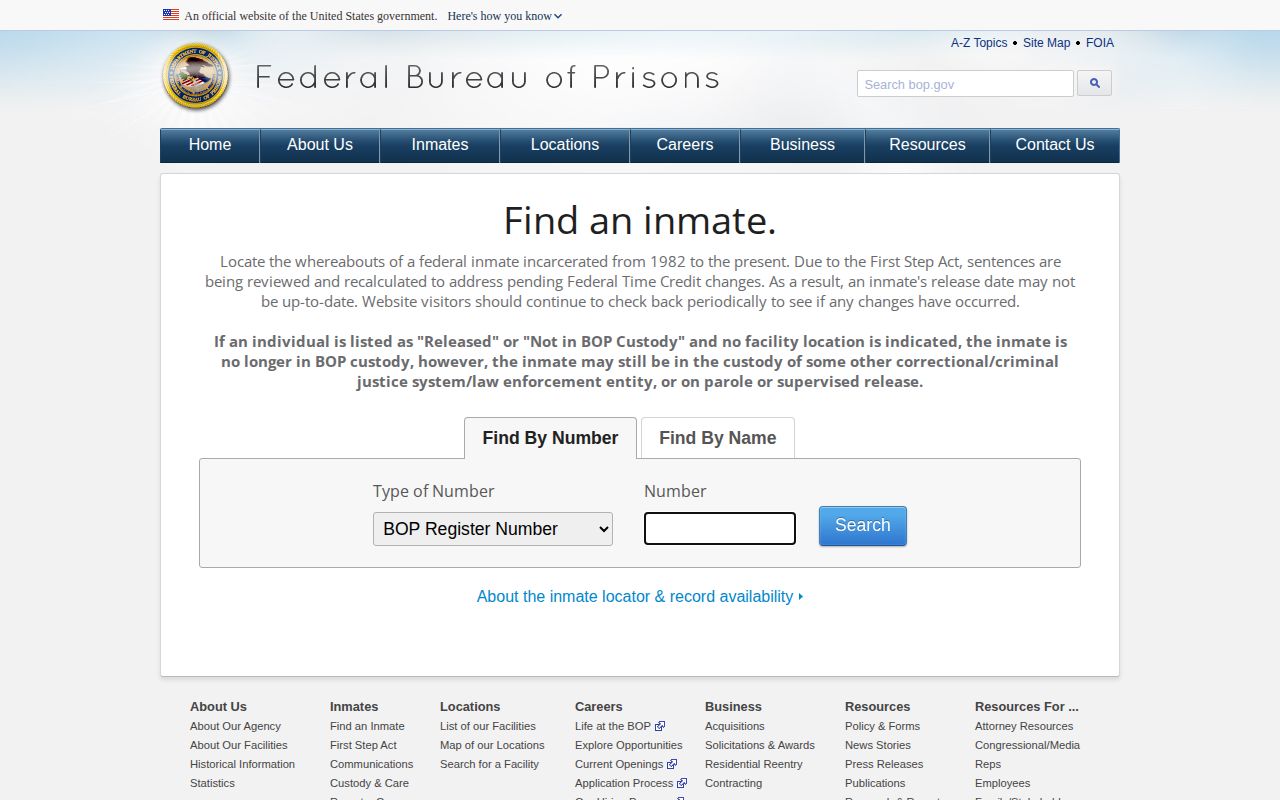
The federal locator should be used only for BOP records, with the result checked against the federal case and any known transfer.
| Result field | What it establishes |
|---|---|
| Register number | Identifies the federal prisoner record. |
| Age, race, and sex | Help distinguish similar names but are not enough alone. |
| Release date | A past date reports release; a future date is projected. |
| Location RELEASED | The person is no longer in BOP custody. |
| UNKNOWN | The term of confinement is not determined. |
Federal Released-Record Coverage Limits
BOP's online released records generally cover people released after 1982. A failed search for an older person is therefore not proof that no federal imprisonment occurred. BOP directs older-record research to the National Archives.
For an archives inquiry, provide the person's full name, date of birth or approximate age, race, and approximate prison dates. For fuller modern BOP records, use FOIA and describe the documents and identity precisely. These routes answer different time periods, and neither should be replaced with an unsourced commercial result.
The BOP explanation of released records is shown in the next official screenshot.
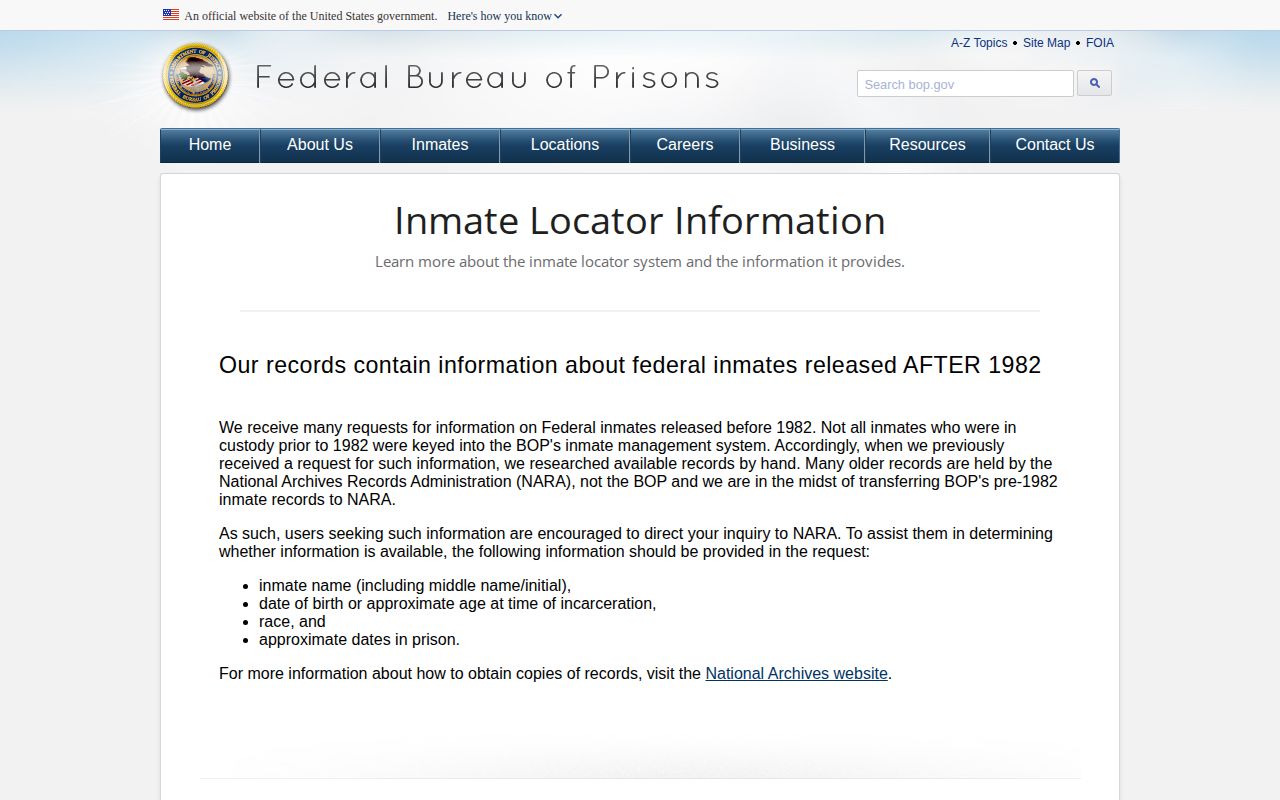
The explanation supplies the correct meaning of released, past, future, and unknown date displays.
Carroll County Federal Pretrial Transfers
Many federal pretrial detainees remain under U.S. Marshals custody and may be housed in contract jails. They may not have a useful BOP locator record. A Carroll County Jail departure to USMS is a transfer between custodians, not release to the community.
Search the Western District of Tennessee federal docket for the case, then use the district USMS public channel for appropriate custody questions. After sentencing and designation, BOP may become the controlling prison locator. The federal judgment provides the legal sentence, while the custodian record supplies the actual physical move.
If the county jail is the starting point, the Carroll County Jail release page explains how to ask for the receiving agency and transfer date.
Federal Supervision After BOP Release
A “RELEASED” location does not mean every part of the federal sentence has ended. A person can move from imprisonment to supervised release administered through U.S. Probation. In older cases, another form of parole may apply. The federal judgment and later court orders define that post-custody term.
Use the locator for the end of BOP custody and the court file for supervised release conditions, modifications, violations, and discharge. Do not translate the BOP release date into dismissal of charges or freedom from every authority. If a state detainer or ICE handoff followed, the corresponding state or immigration record must be checked.
Resolve Conflicting Federal Release Results
First verify the person by register number and demographic data. Then note the exact release date, location, and access date. Compare those fields with the federal judgment and docket. If Carroll County records show a transfer, make sure the BOP record belongs to the same episode and not an older sentence.
A future date can change, so it should be described as projected. A past date establishes release from BOP as reported, but another custodian may have taken the person. When the result is absent, consider USMS pretrial custody, pre-1982 record coverage, spelling variants, and the possibility that the case never entered BOP custody before concluding that no federal trail exists.
Build a Federal Release Record Chain
Begin with the federal register number and case number. Save the locator result, including the displayed location and release date, then obtain the judgment from the federal court. The judgment states the prison and supervised-release terms, while the BOP entry reports the federal custody status. Later docket orders can show modifications, violations, or discharge from supervision.
If the person departed Carroll County Jail before entering BOP, request the county release sheet and receiving-agency field. A USMS transfer can explain why the person did not appear promptly in BOP. After designation, compare the register number and sentence with the federal docket. Do not join records on name alone when aliases or common names create uncertainty.
For modern correction records beyond the locator, send a focused BOP FOIA request. Identify the person and ask for named admission, designation, transfer, or release documents over a defined period. For an older release outside the usual online coverage, use the National Archives details requested by BOP. Each step should preserve the source, access date, and exact status language.
Read Federal Release Dates by Status
A date has meaning only with its location and its position in time. A future date is projected. It can change before release and must not be presented as a completed departure. A past date paired with no facility indicates BOP release on that date under the agency's explanation. Location “RELEASED” states that BOP custody has ended.
“UNKNOWN” is not a release. It means the confinement term has not been determined. The record may need later review once the court and BOP calculation are complete. A result with a named institution indicates reported BOP placement, even if the case docket also contains a future hearing or a motion that could affect the sentence.
Record the live wording and access date because status data can change. If a family report or county record conflicts with BOP, verify the register number and ask whether the events concern different custodians or different sentences. The county jail may have released the person to federal custody well before BOP later reports a release from its own system.
Find Older Federal Release Records
The locator's general online released-record coverage begins after 1982. That limit is crucial for older Carroll County federal cases. A missing older record should lead to an archives search, not a conclusion that the imprisonment never occurred.
Provide the National Archives with the person's name, date of birth or approximate age, race, and approximate prison dates. Add the federal case number and institution if they are known. For modern BOP material, use FOIA instead. The two routes cover different record periods and should be selected from the likely release year.
Historic spelling and identity data can differ from current usage. Search reasonable name variants, but require multiple matching details before attributing a record. A docket, register number, archived prison file, and release date form a stronger chain than an isolated name result.